
Looking to buy diamonds or metal jewellery? Discover our easy guide on getting the best value...
Est 1988 - over 30 years of expertise
Our comprehensive guide helps you understand the most important characteristics-carat, color, clarity, cut, and more-to ensure the maximum quality and value of your selection.


Diamond Education
When shopping for a diamond, it is important to know how they are evaluated.
When selecting a diamond, shape is one of the most important factors to consider.
The contours and outlines of a diamond have a significant impact on its appearance. The Goldery by Eternity Diamonds round cut diamond has long been the most popular, although many modern consumers prefer alternative shapes, including cushion, princess, and radiant, among others.


Round Diamonds
The most commonly chosen shape, round diamonds have been researched by gemologists more than any other variation. Renowned for its unrivalled fire and brilliance, this shape boasts excellent light refraction properties. When all else is equal, round cut diamonds are more valuable than alternative shapes.

Princess Diamonds
A square stone with 90-degree corners, the princess shape originated in the United States in 1980. The most desirable princess diamonds are perfectly square in shape, with the more rectangular variations decreasing in value.

Asscher Diamonds
Introduced in 1902 by renowned diamond cutter Joseph Asscher, this diamond shape utilizes many of the same cutting techniques as the emerald cut. What sets asscher diamonds apart are their uniquely angled and cropped corners creating a timeless look.

Radiant Diamonds
Relatively new to the jewelry industry, radiant diamonds were introduced a little more than 20 years ago. This unique shape is a stunning hybrid of a traditional round cut and an elegant emerald cut, resulting in a square, near-square, or rectangular orientation. As the name suggests, radiant diamonds tend to emit a beautiful, memorable glow.

Cushion Diamonds
First introduced to the jewelry market in the early 1800’s, the cushion cut diamond is rich with diamond history. Cut into a square or rectangular shape with rounded corners and sides, it's considered by many to be a more vintage version of the round cut diamond.

Heart Diamonds
Living up to its name, the heart cut diamond has become synonymous with love and affection, making it an excellent choice for an anniversary or engagement ring. One of the most demanding diamond cuts to create, a heart shaped stone requires great skill and dexterity from the diamond cutter.

Marquise Diamonds
The marquise cut is rumoured to have been specially developed for King Louis XIV of France who wanted a diamond that simulated the smile of Marquise de Pompadour. The elongated Marquise stone has gracefully pointed ends for a dramatically beautiful appeal.

Oval Diamonds
Cut with the same number of facets as a round diamond, an oval shape emits nearly the same level of brilliance and fire. Due to its elongated shape, the oval cut can appear larger than a round diamond of equal carat (weight).

Pear Diamonds
Exuding elegance, the pear shape diamond (also referred to as a drop cut or teardrop diamond) is cut to resemble a drop of water with a single point and rounded end. The result is a cross between a round and marquise cut.

Emerald Diamonds
Emerald cut diamonds are usually rectangular in shape. Distinguished by bevelled corners and step facets, this type of diamond is more transparent than other shapes, often requiring higher standards of clarity.
Inclusions found on a diamond can be considered nature's birthmarks, the distinguishing characteristics that make the stone unique. When grading a diamond, the amount of inclusions and blemishes has a direct impact on its clarity and value. Flawless diamonds containing no inclusions are extremely rare and very expensive. A majority of the commercially sold diamonds contains inclusions that are undetectable to the unaided eye.
To ensure a large selection, Eternity Diamonds offers diamonds with a range of clarity ratings from FL (Flawless) to I1 (Included). Diamonds with clarity ratings of I1 or higher contain inclusions that are typically undetectable without special magnified viewers.
Clarity Scale
A diamond's clarity rating is based on the size, number, and location of internal and external characteristics. Known as inclusions, internal characteristics include crystals, clouds, and feathers. External characteristics, or surface irregularities, are called blemishes. As most inclusions can't be seen by the naked eye, gemologists use a ten-power (10x) microscope to rate a diamond's clarity.
Flawless, Internally Flawless (FL & IF)
Contains no internal inclusions when viewed with 10x magnification. Internally Flawless diamonds may contain external characteristics (also known as blemishes).
Very Very Slightly Included (VVS1 & VVS2)
Contains minute inclusions that are extremely difficult to locate under 10x magnification.
Very Slightly Included (VS1 & VS2)
Contains minute inclusions, such as clouds, crystals, or feathers, which are difficult to locate with 10x magnification.
Slightly Included (SI1, SI2, & SI3)
Contains noticeable inclusions under 10x magnification, including clouds, knots, crystals, cavities, and feathers.
Included (I1, I2, I3)
Contains very obvious inclusions that can usually be seen with the naked eye, as well as under 10x magnification. Included diamonds sometimes display poor transparency and lack of brilliance.
Selecting a Clarity Grade
Below are some points to consider when selecting your desired clarity rating:
- Those who prefer a diamond with little or no inclusions will likely choose a clarity rating of FL-IF or VVS. Although they are priced higher, these high-quality diamonds boast a near-perfect appearance.
- While still considered high quality, diamonds rated in the VS clarity range will not cost as much as more premium clarities. VS diamonds will contain inclusions that are undetectable to the unaided eye
- Considered by many to be a great value, SI1-SI2 diamonds will contain inclusions that can be detected with magnification, yet are typically undetectable to the unaided eye and do not detract from the beauty of the diamond. If you are considering a diamond with an SI rating, contact an Eternity Diamonds diamond and jewellery expert to ensure the inclusions are not visible to the naked eye.
- Those who desire large carat weights at lower prices may choose diamonds in the SI3-I1 clarity range. Inclusions in these stones are usually noticeable without magnification.
- The location of a diamond's inclusions significantly impacts the stone's clarity rating. External and internal characteristics hidden near the side facets of a diamond detract from its beauty less than inclusions and blemishes located in the center of the diamond.
A diamond's colour has a significant impact on its appearance. With its many prismatic facets, a colourless diamond reflects light into a spectrum of hues, a characteristic often referred to as "fire". The presence of noticeable colour in a diamond may reduce its ability to reflect light. Consequently, diamonds with lower colour grades will not show the same luminosity and fire as those with higher grades. The most valuable diamonds have little to no detectable colour.
At Eternity Diamonds, we offer a large assortment of high-quality diamonds in colour grades ranging from D (colourless) to M (faint yellow). A majority of our diamonds appear virtually colourless to the naked eye.
Colour Scale
The diamond colour scale begins at D (colourless) and ends at Z (light yellow). Diamond colour is often difficult to discern when a diamond is viewed face up. Therefore, gemologists typically evaluate diamonds facedown against a pure white surface, illuminated by carefully controlled lighting. The diamond is then compared to master stones of predetermined colour.
D (Colourless)
Highest-quality colour grade a diamond can receive. A D-colour diamond is extremely rare and emits unrivalled brilliance.
E (Colourless)
Contains very minute traces of colour. Also a rarity, an E-colour rated diamond emits a high level of brilliance and sparkle.
F (Colourless)
Minute traces of colour can only be detected by a trained gemologist. This is a high-quality colour grade.
G,H (Near Colourless)
Contains noticeable colour only when compared to higher colour grades. Appearing colourless to the untrained eye, a G or H colour diamond provides an excellent value.
I,J (Near Colourless)
Contains slightly detectable colour. An I-colour or J-colour diamond is an excellent value, as it typically appears colourless to the untrained eye.
Selecting a Colour Grade
Colour is an important factor to consider when choosing a diamond, as it is noticeable to the unaided eye. Below are some points to keep in mind when selecting a colour grade:
Those who prefer a colourless diamond should select a stone in the D-F range with a fluorescence rating of "None" or "Faint".
Near colourless diamonds with a rating between G and J are excellent values, as their colour is typically undetectable to the unaided eye. If you are considering a diamond in this colour range, an Eternity Diamonds and jewellery expert can review the stone to ensure the colour cannot be seen with the naked eye.
A near colourless diamond can appear whiter when set in platinum or white gold metals. Yellow gold settings complement diamonds with lower colour ratings.
The presence of fluorescence can enhance the visual appeal of a diamond with a lower-colour rating in the J through M range. The fluorescence helps to cancel out any faint yellow in the stone, resulting in a colourless appearance.
A common misconception is that only colourless diamonds exude brilliance. In reality, a well-cut diamond can emit fire and beauty even with traces of faint yellow, although the presence of colour will decrease the stone's value.
Fluorescence
Fluorescence, the effect ultraviolet (UV) light has on a diamond, is an important consideration when selecting a diamond. When UV light strikes a diamond with fluorescent properties, the stone emits a glow (usually blue) ranging from very faint to quite strong.
Fancy Coloured Diamonds
Diamonds that exhibit a colour other than light yellow or brown, as well as diamonds that possess a more intense yellow or brown than the 'Z' colour rating, are considered "fancy coloured". With only one out of ten thousand diamonds possessing a natural colour, these types of stones are extremely rare. Depending on the colouration, intensity, and hue of a diamond, colour can either detract or enhance its value. Naturally occurring diamond colours include gray, white, blue, yellow, orange, red, green, olive, pink, purple, brown, and black. Red stones are the most rare of the fancy coloured diamonds.
Similar to the process for grading colourless diamonds, a diamond's fancy colour is graded by comparing it to master stones of predetermined colour. Unlike colourless diamonds, fancy coloured diamonds are graded face up. The most important factors in determining the value of a naturally coloured diamond is the strength of its colour. The value of a fancy coloured diamond increases with the intensity of the most prominent hue within the stone.
The carat is the standard unit of measurement used to indicate the weight of diamonds and precious gemstones. Since 1913, carat weight has been gauged against the metric system, with one carat equaling 0.2 grams or 0.007 ounces. Carat weight is measured to three decimal points and rounded to the nearest hundredth.
Carat Weight and Price
Mined from deep within the layers of the Earth's crust, most rough diamonds are either too small or too inferior in quality to produce the lustrous, polished products demanded in the fine jewellery market. Consequently, the production of a single, one-carat diamond can require the mining of up to one million rough diamonds. The rarity of larger, high-quality diamonds has resulted in significant price escalations between sizes. For instance, a one-carat diamond can command four to six times more than a half-carat diamond.
Selecting a Carat Weight
Both carat size and quality should be taken into account when selecting a diamond. Below are some points to consider when choosing which carat weight is right for you:
- Diamond pricing is determined by carat weight, and broken down in half-carat increments. Therefore, assuming factors like cut and clarity are equal, a diamond weighing one carat will cost more than a diamond weighing slightly less than one carat.
- While its carat measurement indicates the weight of a diamond, its length and width measurements indicate the actual physical size, or how big the diamond will appear when viewed from above. Diamonds of the same carat weight can vary in size. For example, a one-carat round diamond could measure 5.9 mm in diameter, while another one-carat round diamond could be 6.5 mm wide. Broader diamonds with larger millimeter measurements create greater visual impact.
- The price of a diamond rises as the carat weight increases. If carat weight is the most important factor in your search, consider a diamond with a clarity grade of Slightly Included (SI1-SI3) and a colour grade of Near Colourless (G-J).
- The shape of a diamond may impact how the stone appears when viewed from above. Diamond shapes cut at lower depths will have larger lengths and widths. Shapes like oval or marquise will have elongated lengths, resulting in the illusion of a larger size per carat weight.
- When choosing a carat weight, be sure to consider the ring size of the wearer. A one-carat diamond will appear larger on a size-5 finger than it would on a larger hand.
- If you have already chosen a ring setting or have one in mind, you may be restricted to certain diamond shapes and carat ranges.
Carat Origin
The origin of the word -carat- lies in the Mediterranean region, where carob trees have flourished since ancient times. The seeds of the carob tree were once used as units of measurement against which diamonds were weighed. One carob seed is roughly equivalent to one modern carat, the word we use today to describe the weight of diamonds.
In the Far East, diamonds were historically weighed against grains of rice, resulting in the coining of the term 'grainer'. Today, gemologists still quantify the weight of diamonds in grainers. A four-grainer diamond is equal to one carat.
One of the most defining characteristics of a diamond is its cut. While high grades of color, clarity, and carat weight also contribute to a diamond's appeal, it's the cut that determines the symmetry of the stone's facets, its overall proportions, and its ability to reflect light. An expertly cut diamond will achieve high levels of brilliance, sparkle, and durability. Even if a diamond is graded well in other areas, a poor cut can result in a dull, muted effect.
Fluorescence, the effect ultraviolet (UV) light has on a diamond, is an important consideration when selecting a diamond. When UV light strikes a diamond with fluorescent properties, the stone emits a glow that is usually blue, but can also be shades of green, yellow, white, pink, orange, and red. The sources of fluorescence, boron and nitrogen, are the same mineral properties that lend to diamond coluor.
Fluorescence can occur in different intensities. Gemological laboratories rate the fluorescence of each diamond on a scale from "None" to "Very Strong".
The girdle is the thin perimeter of a diamond, dividing the crown above from the pavilion below. When viewing a diamond in its setting or from a profile view, the girdle is the widest part (or the circumference) of the polished diamond - the portion of the stone that makes contact with the setting itself. When loose diamonds are measured, they are measured by the girdle to obtain length and width in millimeters.
The girdle of a diamond can be rough, polished, or faceted. In modern gemstone preparations, brilliant cut diamonds (with triangular-shaped facets) usually have a faceted girdle rather than a perfectly round girdle; this gives the gem a higher measure of transparency. Step cut diamonds (with rows of elongated facets that act as mirrors) usually have polished girdles that are not faceted.
The culet (pronounced kyoo-lit) of a diamond is the tiny point at the base of the pavilion, where the facets of the pavilion meet. In the majority of diamonds, the pavilion facets are uniformly cut at the proper angle and meet at a perfect point, yielding no culet (sometimes called a pointed culet). When the pavilion facets do not meet at a point, the culet is a rough or polished facet. The presence of a culet adds an additional facet to the diamond's total number of facets, while a pointed culet does not. For example, a brilliant round diamond with a faceted culet has 58 facets, while a diamond with a pointed culet has 57 facets.

Metal Education
Discover the characteristics of the main metal jewellery materials - gold, silver and platinum.
About Gold
Renowned for its gleaming luster and denseness, gold is known as the softest and most pliable natural metal. In its purest form, gold is bright yellow in colour but is often mixed with other metals, such as silver and copper, to form a more durable alloy that's more resistant to everyday wear and tear.
Additionally, these alloys help colour gold and produce shades of white, yellow, and rose. At Brilliance, we specialize in high-quality 14 karat and 18 karat pieces, the standard for fine gold jewellery.
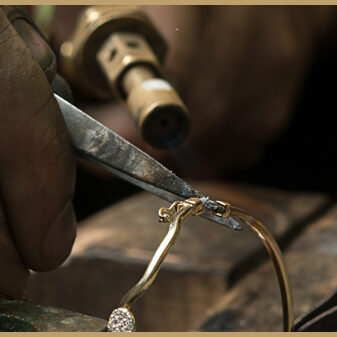
There are various grades of gold purity, determined by the ratio of their alloy composition and rated by a karat system. Typical karat purities range from 10 karats to 24 karats (pure gold), with a wide variety of usage from country to country. In the United Kingdom, the most popular composition is 14 karat gold.
Below are some of the most common gold densities, along with the characteristics and pure gold content of each:
24 Karat Gold
In its purest form, the metal is comprised of 100% gold with virtually no alloy metals. Pure gold is extremely soft and pliable, which is why it's often mixed with other metals, such as copper and silver, to forge jewellery.
22 Karat Gold
This level of gold is 91.7% pure which is still too soft to make jewellery and not as durable as 18K or 14K.
18 Karat Gold
This alloy consists of 75% gold and 25% alloy metals. 18 karat gold has been found to be the perfect balance between gold purity and strength. Brilliance offers a variety of exquisite 18 karat gold jewellery.
14 Karat Gold
14 karat gold is 58.3% pure gold; the remainder is comprised of alloy metals. Any gold purity less than 14 karat gold is not recommended for high-quality jewellery.
10 Karat Gold
This tier of the metal consists of 41.7% gold. This is the minimum purity that can still be considered gold in the United Kingdom and is not used for high-quality jewellery.
Some countries use a required hallmarking system to imprint each gold jewellery piece with the karat count. Hallmarks for gold will typically appear as the karat weight (for example, 18 or 14) followed by 'K', 'KT', or 'karat'. Although this is not a government-mandated law in the United Kingdom, many of our pieces are stamped with the karat weight as a means of ensuring a confident, informed jewellery shopping experience.
Due to its inherent softness and malleability, gold is rarely used alone when forging a jewellery piece. Instead, it's blended with other fine metals to lend more hardness and durability. When pure gold is combined with these other metals, it takes on a variety of rich shades that have become desirable in their own right. At Eternity Diamonds, we offer an assortment of contrasting hues in our fine gold jewellery:
Yellow Gold
The most popular shade of the precious metal, yellow gold is used to create a majority of the fine jewellery on the market today, especially engagement rings and wedding bands. It gets its warm, lustrous hue from the silver and copper alloys with which it's mixed. Within the yellow gold family, there can be a marked difference in shading based on the karat weight-for instance, an 18 karat yellow gold ring will be richer and more brilliant in colour than one measuring 10 karats.
White Gold
Another popular choice for engagement and wedding rings, white gold gets its gleaming silver hue from the addition of alloy metals, including palladium, zinc, copper, tin, and manganese. The highest quality of white gold jewellery is generally 18 karats, consisting of a mixture of pure yellow gold and palladium. At Eternity Diamonds, we coat each of our white gold pieces with a protective plating of Rhodium, a gleaming, near-white metal coating that's comparable in appearance to platinum. White gold can be re-dipped in Rhodium periodically to help maintain its original luster.
Rose Gold
Often heralded as a romantic metal, rose gold gets its striking colouration from the addition of copper and silver. The larger the ratio of copper, the darker the rose colouration will be. Referred to as 'crown gold,' the most precious rose gold has a 22 karat weight. The more common 18 karat rose gold is comprised of 25% copper and 75% gold.
Although gold is resistant to corrosion, it may become dull or dirty with frequent wear. Periodic cleanings of your fine gold jewellery can help to restore its original luster and keep it looking its best. Below are some tips and techniques on safely maintaining your gold jewellery:
- For a cleaning solution, use a mix of mild non-abrasive detergent and warm water. Gently scrub the surface of the gold with a soft-bristled jewellery brush. Using a small brush will help to cleanse hard-to-reach areas, such as in between the prongs of a diamond ring setting or the clasp of a gold watch. Use a soft cloth to polish the jewellery piece. Be sure to wipe until the gold is completely dry.
- When not in use, store your gold jewellery safely to avoid contact with other pieces, which can cause scratching. Ideally, each gold piece should be kept in its own plastic zip-lock bag or soft cloth pouch to avoid tarnishing. At Eternity Diamonds, we offer a finely crafted jewellery box to help preserve, protect, and organize your cherished valuables.
- Avoid contact with chlorine, bleach, harsh soaps, and lotions, as these can damage or compromise the surface of the gold.
- Every so often, it's a good idea to invest in professional jewellery cleaning to ensure the beauty and longevity of your gold. At Eternity Diamonds, we offer complimentary cleaning and polishing services for every fine jewellery product we sell. Contact us to learn more about how your favourite gold jewellery can look new again.
Discovered as early as 3,000 BC, gold has served as an ornamental and economic fixture for many centuries. A chemical element, it's a highly prized metal mined from rocks and sediment. From the ancient civilizations of Egypt, Greece, and Rome through the Middle Ages and the modern period of the 1800s, gold has figured prominently in the history and culture of societies spanning the globe. In 1848, the California gold rush brought about a drastic spike in the production and distribution of the metal. Today, gold lends timeless beauty and longevity to a majority of the fine jewellery on the market today. At Eternity Diamonds, we're proud to offer a hand-picked assortment of gold rings, earrings, bracelets, and necklaces, available in a rich medley of colours and karat weights.
Valued as a precious metal since ancient times, silver is used to craft many of the fine jewellery pieces on the market today. Once considered more precious than gold, pure silver is a soft metal with a white, lustrous hue. In addition to jewellery making, silver is used in a wide variety of industrial and decorative applications, including fine serving ware, flatware, decorative accents, personalized gifts, coins, and electrical components. Silver is produced as a by-product of the mining of other metals, including gold, lead, copper, and zinc.
At Eternity Diamonds, we proudly offer a wide assortment of sterling silver jewellery pieces. Preferred by many for its budget-friendly value and versatile colouring, silver exhibits a timeless elegance and easy-care durability.
Due to its high level of inherent softness, pure silver is actually too malleable to be used alone in jewellery making-it is easily dented and scratched when exposed to daily wear and tear. Instead, silver is typically mixed with other alloy metals. Copper is the most commonly chosen companion; its durable resilience lends stability and longevity to sterling silver pieces.
At Eternity Diamonds, each of our sterling silver pieces boasts a purity of 925, which denotes a silver content of 92.5% and an alloy composition of 7.5%. This is the standard that determines whether a jewellery piece can be designated as "sterling" or pure silver-anything less than 92.5% does not qualify.
The most reliable method of ascertaining the purity of a sterling silver piece is to examine it for hallmarks. First implemented in France and Great Britain as early as the 14th century, a hallmark is a stamp or marker applied to a piece of silver jewellery to indicate the amount of its pure silver content, and in some cases also signifies the date of production and country of origin. These stamps are usually applied with a special branding tool or small hammer. A stamping of ".925," "Sterling," or "coin" all indicate that a silver jewellery piece meets the "sterling" or pure silver standard.
Although it is not a government-mandated law in the United Kingdoms to stamp a piece of jewellery with its hallmark, Eternity Diamonds stamps many pieces of our high quality silver jewellery as a means of ensuring a confident, informed jewellery shopping experience.
Pure silver possesses a milky white or grey colour that has inspired the nickname "metal of the moon." At Eternity Diamonds, we coat all of our silver jewellery pieces with a layer of Rhodium metal to create a lustrous, long-lasting shine comparable to white gold. The Rhodium coating can be re-applied periodically to return the piece to its original high gleam.
Silver is more prone than other precious metals to tarnishing from oxidization, which can cause its surface to turn dull or black. You can help prevent these undesirable effects by following the proper guidelines for polishing and storage.
To help extend the longevity and beauty of your silver pieces, you should follow the proper guidelines for care, cleaning, and storage. Since it's much softer than other metals and gemstones, silver requires special methods to retain the integrity of its texture and composition.
To remove oil, dirt, tarnish, and smudges from the surface of silver, you should polish it regularly with a soft cloth. Never use rough or coarse fabrics, as these can result in scratching. Avoid using harsh chemical cleaners, which can cause discolouration. Every few months, you might consider taking your silver piece to a professional jeweler for a thorough cleaning, and perhaps a fresh coating of Rhodium to recapture its original shine. At Eternity Diamonds, each of our fine silver jewellery pieces comes with complimentary professional cleaning and polishing services to restore your purchase to its original luster. Perhaps even more important than a proper cleaning regimen is the method of storage used for your silver pieces. To prevent the oxidization that can cause dullness and tarnishing, each silver piece should be stored in its own dedicated soft pouch, plastic bag, or box lined with tarnish-resistant material. Avoid keeping silver in warm, moist environments, such as bathrooms. Instead, store jewellery in a dry, cool area.
Silver has enjoyed a long and heritage-rich history. In ancient Egyptian times, the metal was revered as possessing religious and spiritual significance, and was often used during worship. Originally considered much more precious than gold, silver did not become available to the middle class until the 16th and 17th centuries. In the 1800s, nobility began using silver in their tableware, flatware, and other serving accessories.
Dating back to the time of primitive man, silver has been referred to by many different naming conventions. The story of how the word "sterling" was incorporated into the name is rooted in 12th-century lore. As payment for English cattle, an association of eastern Germans compensated the British with silver coins dubbed "Easterlings." Eventually, the Easterling was widely accepted as a standard of English currency. The name was ultimately abbreviated to "Sterling," which is now used to refer to the highest grade of silver metal.
Silver has enjoyed a long and heritage-rich history. In ancient Egyptian times, the metal was revered as possessing religious and spiritual significance, and was often used during worship. Originally considered much more precious than gold, silver did not become available to the middle class until the 16th and 17th centuries. In the 1800s, nobility began using silver in their tableware, flatware, and other serving accessories.
Dating back to the time of primitive man, silver has been referred to by many different naming conventions. The story of how the word "sterling" was incorporated into the name is rooted in 12th-century lore. As payment for English cattle, an association of eastern Germans compensated the British with silver coins dubbed "Easterlings." Eventually, the Easterling was widely accepted as a standard of English currency. The name was ultimately abbreviated to "Sterling," which is now used to refer to the highest grade of silver metal.
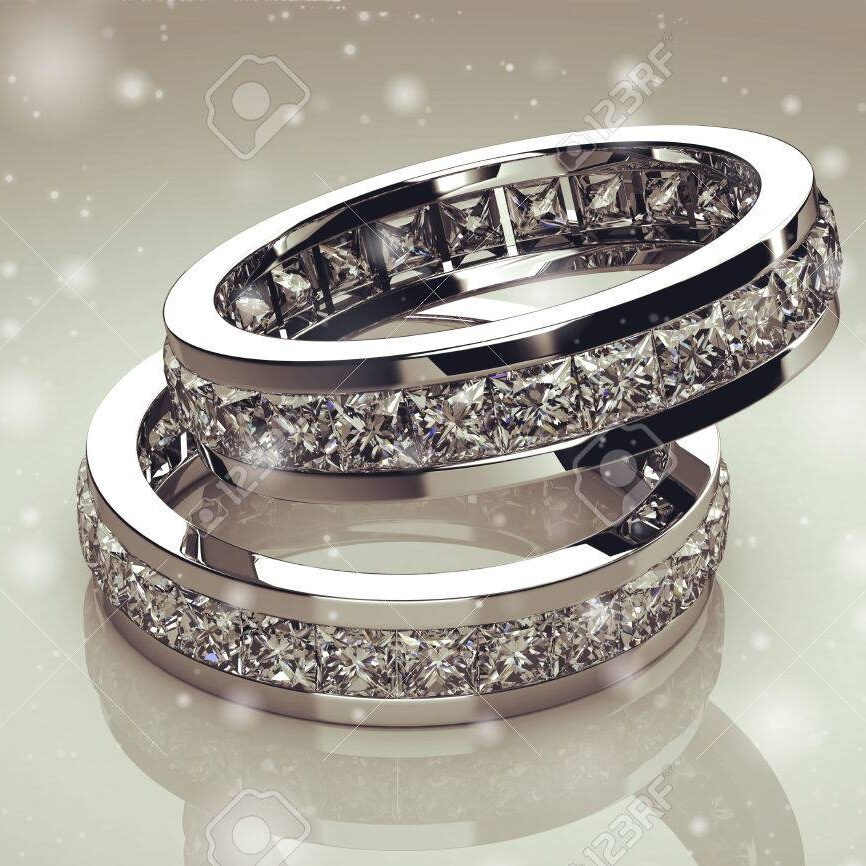
About platinum material...
Often heralded as just as beautiful as the gems it displays, platinum boasts a silvery-white luster that imparts unmistakable elegance and blends well with a variety of metals and stones. Four times stronger than gold, platinum is renowned for its hard-wearing properties, resistance to damage and wear, and its substantial heft.
At Eternity Diamonds, we're proud to offer a wide assortment of platinum settings for our finest jewellery pieces. All of our platinum consists of at least 95% pure platinum, with a maximum of 5% alloy metals. Nearly all of our solitaire and engagement rings have platinum prongs to keep diamonds securely in place.
Considered among the most pure and precious metals used in modern-day jewellery making, platinum has become synonymous with luxury and longevity. Because of its hardness and durability, pure platinum is often mixed with other metals to make it more malleable. The most common alloy metals paired with platinum are copper, palladium, rhodium, iridium, and titanium.
Although some alloys may be billed as platinum by jewellery sellers, there are stringent requirements for what constitutes a 'pure' platinum piece. Only metals marked with a 950 or 900 purity designation are considered high-grade platinum. Alloys containing a lower ratio are often used to make jewellery, but these pieces don't impart the same high standards of quality, longevity, or beauty. At Eternity Diamonds, we use only the purest platinum alloys to craft our fine jewellery.
950 Platinum
Pieces marked with a 950 purity are a blend of 95% platinum and 5% alloy metals (usually copper, cobalt, iridium, rhodium, tungsten, or palladium).
900 Platinum
Pieces marked with a 900 purity consist of 90% platinum and 10% alloy metals (usually palladium or iridium).
If you're examining a piece of jewellery forged from a precious metal, look for the hallmark as a way of indicating its purity. Pure platinum is often marked simply with the letters 'PLT', 'PLAT', or 'PLATINUM', which indicates that the piece consists of at least 95% platinum. If other alloys are added, such as copper or palladium, the hallmark will indicate the number of parts-per-thousand, such as '900PLAT' (900 parts of platinum out of 1000).
Although it is not a government-mandated law in the United Kingdom to stamp a piece of jewellery with its hallmark, Eternity Diamonds stamps many pieces of our high quality platinum jewellery as a means of ensuring a confident, informed jewellery shopping experience.
In recent years, palladium has gained in popularity as a comparable, more economic alternative to platinum. Hovering somewhere in between gold and platinum in terms of rarity and price, palladium weighs substantially less than platinum. Because jewellery price is determined largely by its mass, its lighter weight makes palladium significantly less expensive than platinum.
Many jewellers prefer palladium because it's softer and more malleable than pure platinum, making it easier to work with. Its dark grey colouring allows palladium to blend favourably with sterling silver pieces, and it retains its original shine longer than platinum (although it will eventually acquire the same dull, matte finish over time). Like white gold and platinum, palladium can be refinished to regain its original luster.
To maintain the beauty and shine of a piece of platinum jewellery, be sure to clean it periodically. It's safe to use the same cleaning methods you would use for gold. Immerse it in a mild, non-abrasive jewellery cleaner and then gently rub the surface of the metal with a soft cloth. Every few months or so, have a professional jeweler perform a thorough cleaning and buff the surface free of any scratches. If you'd like, you can also ask the jeweler to polish the metal for a shinier look; otherwise, it will acquire a matte patina over time. At Eternity Diamonds, we offer complimentary cleaning and polishing services for every fine jewellery product we sell. Contact us to learn more about how your favorite platinum jewellery can look new again.
When you're not wearing your platinum jewellery, it's best to store it in its own cloth bag, sealable plastic bag, or lined box to keep it from coming into contact with other pieces, which can result in scratching.
Platinum is a metal with a rich and deep-rooted history. Mined in Russia and South Africa, it was first used in decorative applications in ancient Egypt more than 3,000 years ago. Preferred for its remarkable strength and longevity, the metal was used to adorn Egyptian coffins. The South American Inca Indians also made use of platinum to decorate their artifacts. With the Spanish conquest of South America, the metal's value was diminished, as the Spanish people considered it to be far inferior to silver. It wasn't until the 1800s that platinum began to reclaim its original status as a precious and treasured metal. Today, it's regarded as the premier choice for the setting of fine diamonds and other gemstones.
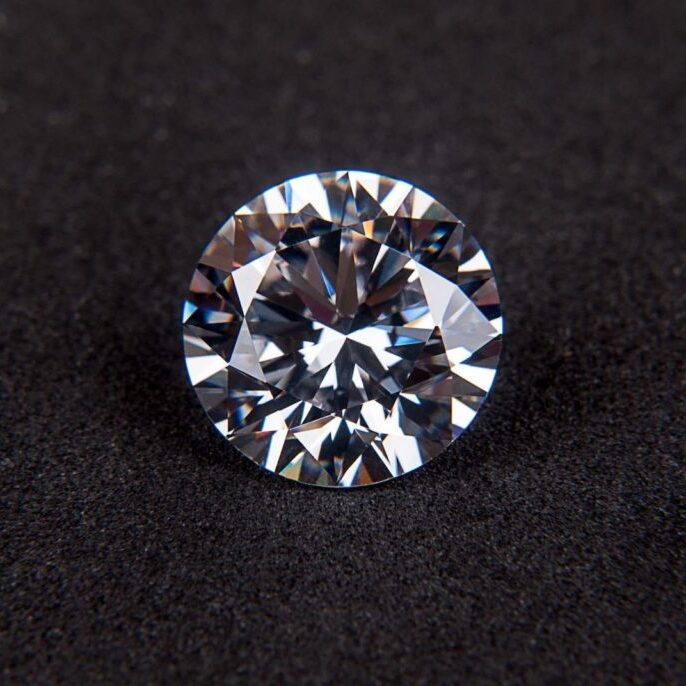
Discover our materials guide
When shopping for silver, gold and diamond jewellery - it's important to know how they are evaluated and valued. Our comprehensive guide helps you understand the most important characteristics, carat, colour, clarity and cut to ensure you achieve the maximum quality and value of your selection.
Unsure what size ring to get?
Ring sizes are expressed by letters of the alphabet. To find the right size for you, read and print out our ring size guide to get the perfect fit.